Table of Contents
Posters are a great way to add colour and personality to any room. Whether you have a favourite movie, concert, destination or even a favourite superhero, there is usually a poster to help celebrate it. Posters have become part of modern culture, and often say a lot about our identity, style and the way we decorate our homes.
Most of us have a special poster or two we would love to frame. A framed poster can be the perfect personal touch for your wall. Whether it is a movie poster, a concert poster or a travel print, the right display can add inspiration to your space and reflect your personality.
There are several things to think about when it comes to framing a poster and choosing a poster frame. You want your poster to look great, but you also want it to last. That usually leads to a few common questions.
For example: “What style of frame should I choose?”, “What size frame is right?” and “How can I remove wrinkles and creases from a poster?”
In this article, we will share expert tips on how to frame a poster so you can create a display that looks good and lasts. From choosing the right poster frames to selecting the right size, we will cover the key things you need to know. Keep reading and you will be hanging your new poster frame in no time.

Where can I buy a new art poster?
There are plenty of places to buy posters online. Marketplaces like Etsy and eBay offer a wide range of styles to suit different tastes and budgets. Websites such as Redbubble and Zazzle are also popular options that ship to Australia. You can also search by theme, such as travel posters, concert posters or movie posters, and you will usually find plenty of choices.
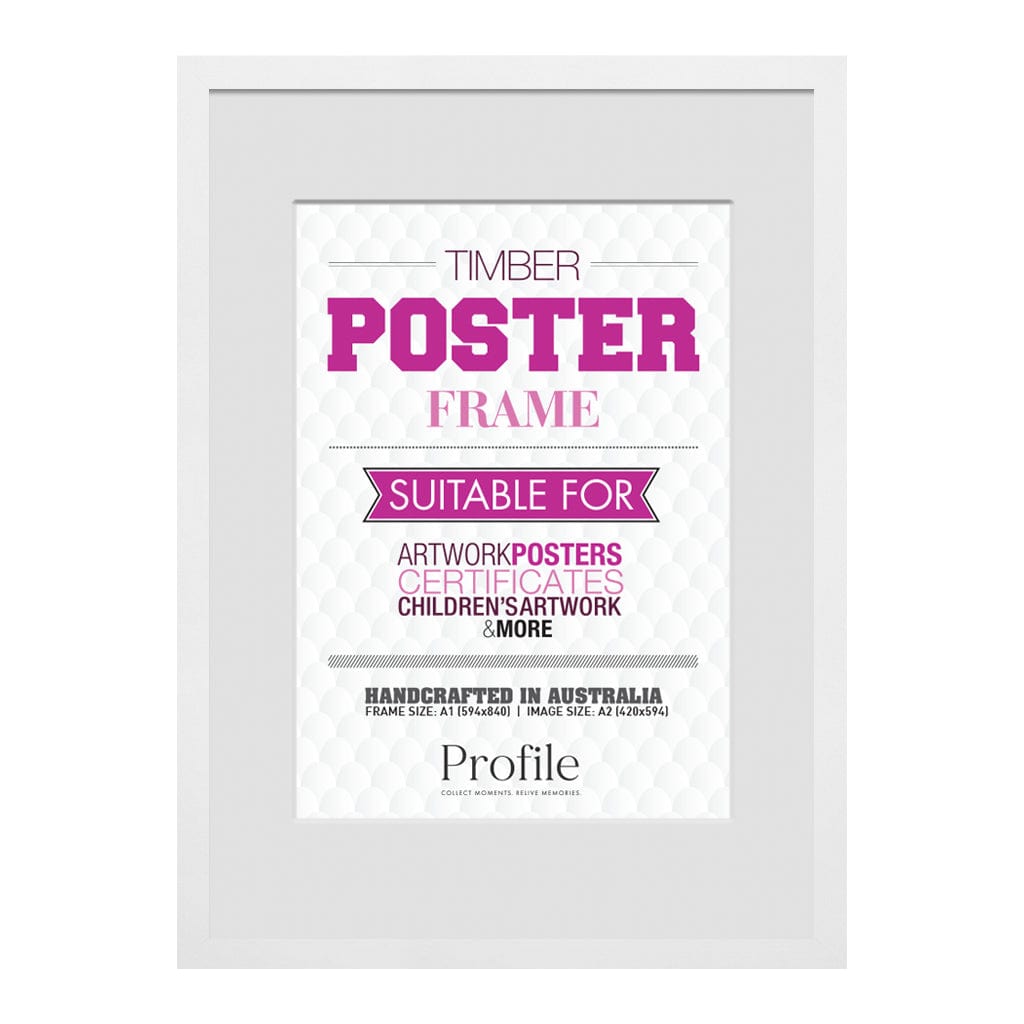
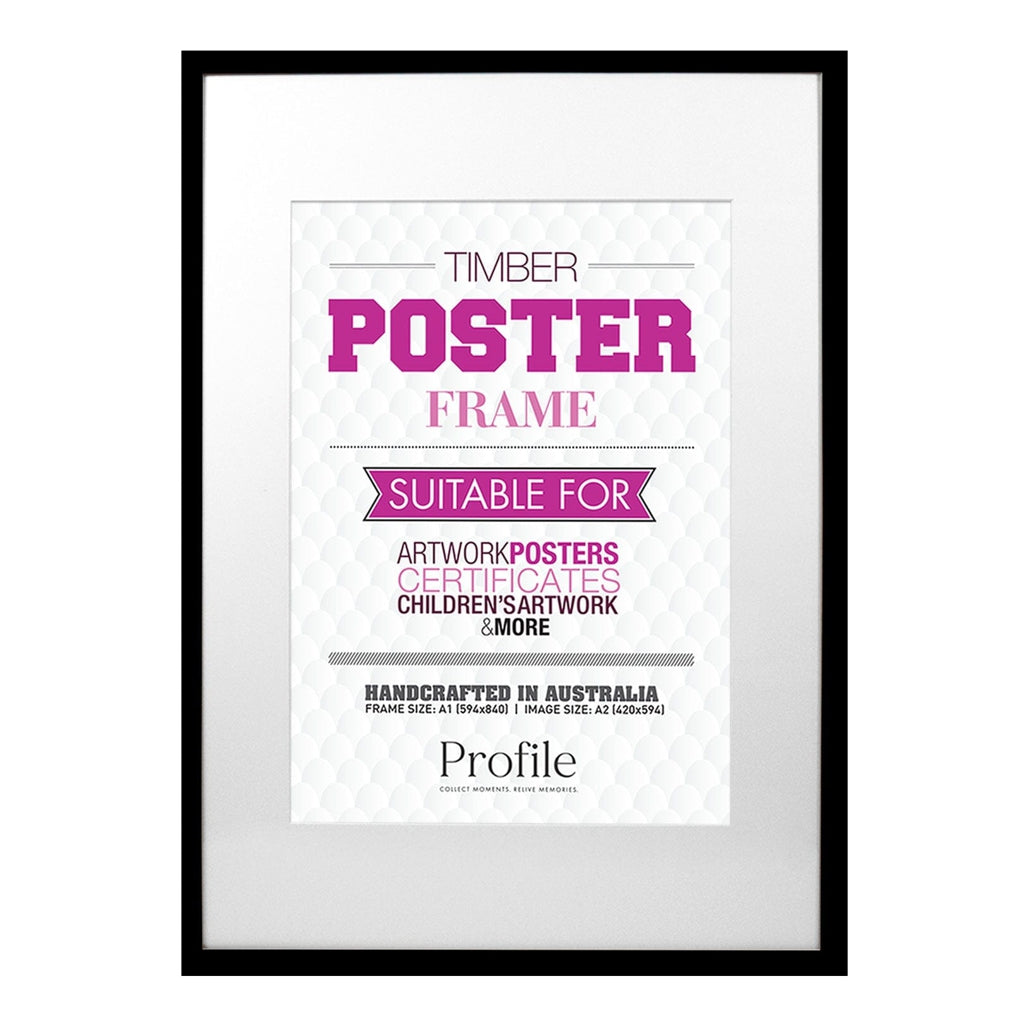
If you're after something stylish and on-trend, Profile Australia also offers a beautiful collection of unframed or framed posters in popular poster sizes to suit your space and decor.
When buying a poster online, you may be able to choose the type of paper it is printed on. Our advice is to choose a thicker, better quality paper where possible. In general, the thicker the paper, the easier the poster is to frame, the flatter it will sit, and the longer it should last.
Thicker paper is usually safer to handle, less likely to crease or kink, and better at staying flat than cheaper, thinner paper. We would recommend a paper weight of around 230gsm or higher.
You can also find online services that print your own image as a poster. This can be a great way to turn your favourite travel photo or Instagram image into something worth framing.
If you are ordering a custom print, it is also worth learning what makes a good quality poster or art print before you buy.
What sizes do poster frames come in?
Poster frames come in a range of sizes to suit different poster dimensions. Some of the most common framed poster sizes are:
- A1 Frames (59.4 x 84.1cm)
- A2 Frames (42 x 59.4cm)
- A3 Frames (29.7 x 42cm)
- 50x70cm Frames
- 61x91cm (24x36 inches) Frames
- A0 Frames (84.1 x 118.9cm)

These standard sizes are popular and readily available from major retailers and online stores. Most poster frames can also be hung in either portrait or landscape format.
It is important to choose the right frame size so your poster fits properly without gaps, trimming or buckling. When selecting a frame size, think about both the dimensions of your poster and the space where you plan to hang it.
If you're unsure which size frame will work best, measure the poster carefully before buying. Measure the width and height from edge to edge, and double-check in a couple of places in case the paper is slightly out of square. For best accuracy, measure the actual poster itself rather than relying only on the size listed online.
You can also refer to our helpful frame sizes conversion chart to compare common frame and poster sizes.
If you have an irregular sized poster, you may need to consider a custom-made frame or a cut-to-size mat board that can be tailored to suit your poster.
How can I frame an odd sized poster?
If you have an odd or unusual size poster, there is still a simple option. Choose a standard poster frame that is slightly larger than your poster, then add a custom border mat, commonly called a mat board.

A mat board can be cut to a wide range of standard and custom sizes, and helps centre and balance your poster neatly inside the frame.
Profile Australia offers a great range of cut-to-size custom mat boards in different colours.
This can be more affordable than ordering a fully custom-made picture frame, and it can still look excellent.
If you need help working out the border width, try our mat border calculator guide to calculate a cut-to-size custom mat board for your poster frame.
What if my poster is a really large size?
If your poster is larger than 61x91cm, this becomes a less common size and may need a specialised custom-made picture frame. In that case, we recommend speaking with a professional custom framer.
Depending on the value of the poster, it may also be worth having it mounted down flat, especially if you want to reduce the risk of visible cockling or buckling over time. If the poster is collectable or high in value, ask about a removable conservation method such as hinging rather than a permanent mount.
What style of picture frame will make my poster look great?
When choosing a picture frame for your poster, there are a few things to think about:
- Do you want it to suit your room and decor?
- Do you want it to suit the colours, style or subject of the poster?
- Do you want it to do both?
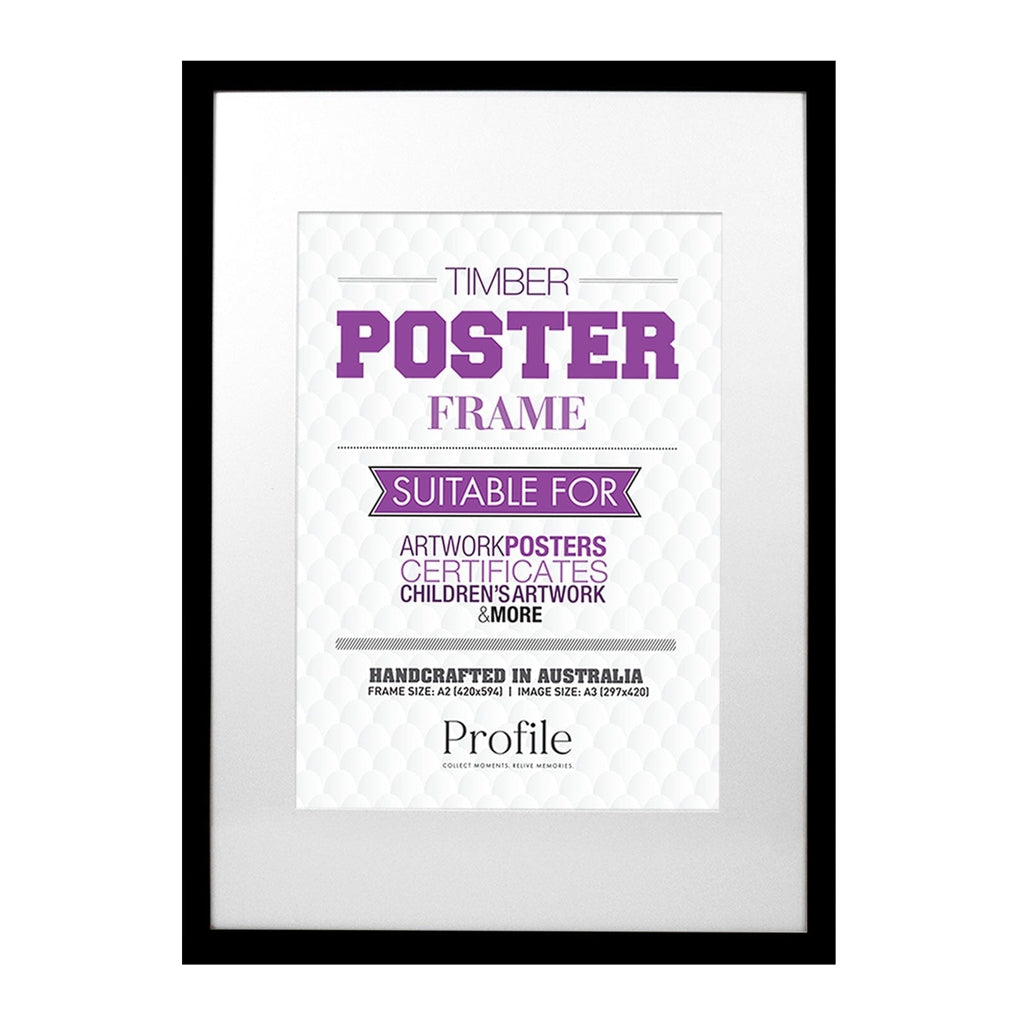
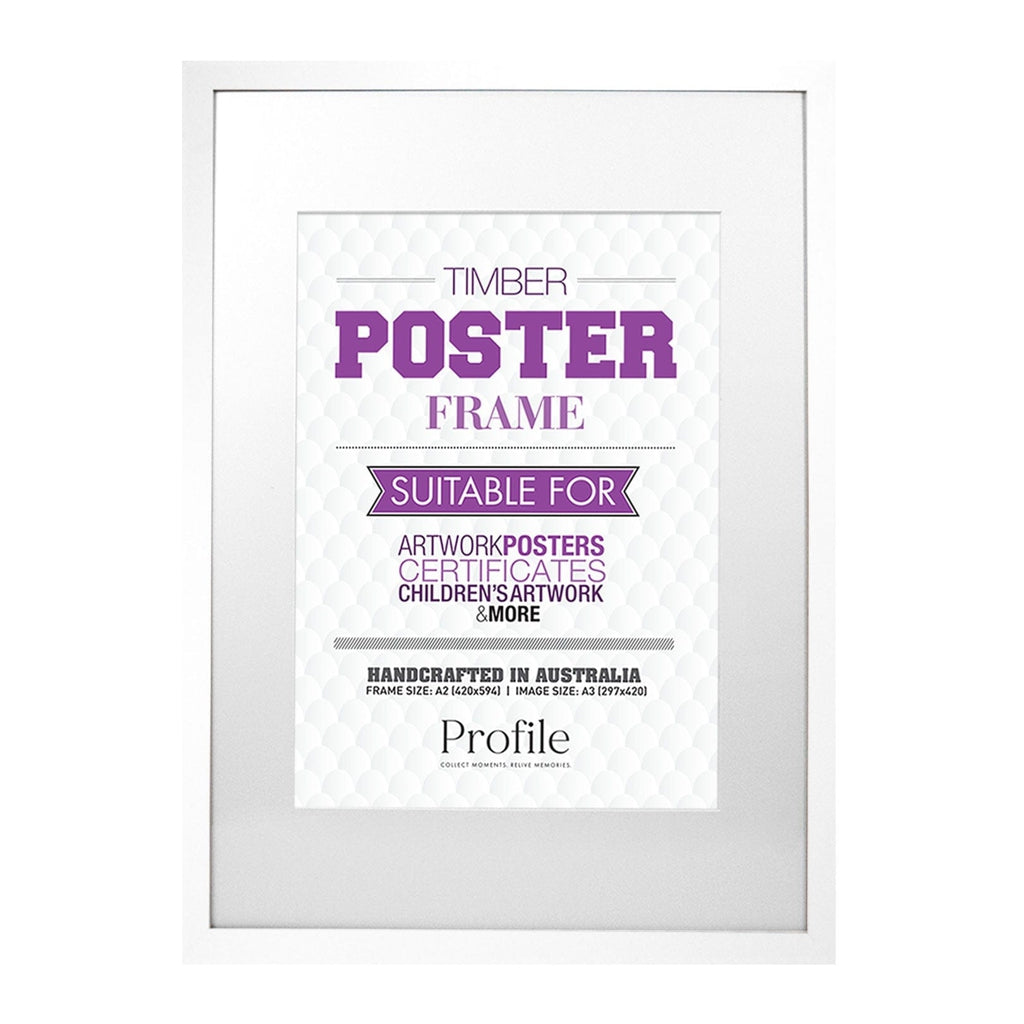
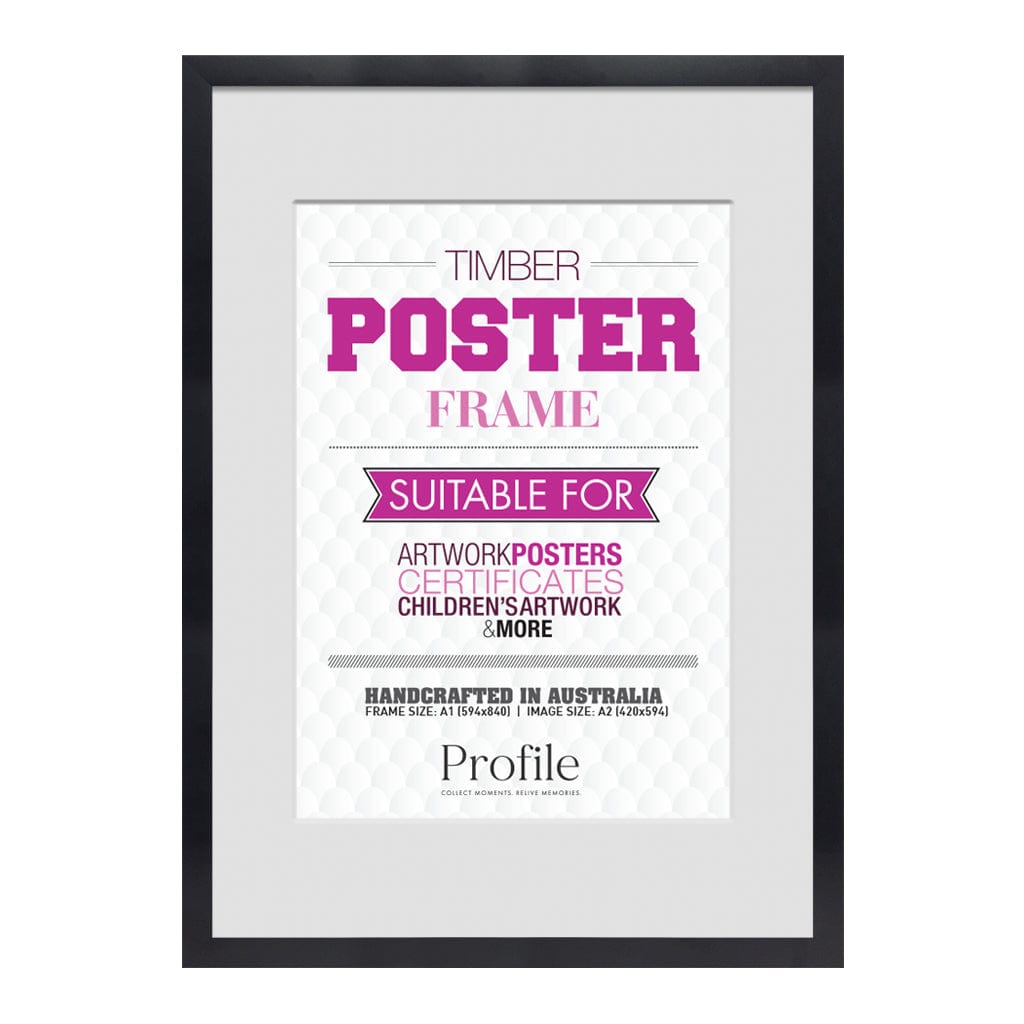
Most posters are vivid, bold and colourful. Because of that, neutral frame colours such as black, white and timber are usually the safest choice. They do not compete with the colours in the poster, which keeps the focus on the artwork.

If your poster has a strong accent colour, that colour can stand out even more against a neutral frame. For example, a bright red or yellow detail can look stronger when surrounded by a black poster frame.
It is also worth thinking about your furniture and decorating style. Black frames can feel stronger and more dramatic, which makes them a good choice for a feature piece. White poster frames can feel brighter and lighter, which suits softer and more open spaces. Natural timber poster frames often feel warmer and more relaxed.

There is no single right answer here. Most posters can look good in many different picture frames. The goal is to choose a frame that feels right in your space and makes you happy to look at it every day.
Do I need a mat board?
A mat board is a border board with a window cut-out that surrounds the artwork inside a picture frame.

As mentioned earlier, mat boards are ideal if you have an odd sized poster that you want to fit inside a standard poster frame. You can buy a standard frame, then get a pre-cut mat board to suit both the frame and the size of the poster. The mat board window is centred to position the poster neatly inside the frame.
A mat board can also improve the look of a framed poster by creating visual space between the image and the inside edge of the frame. That extra breathing room often gives the finished result better balance.
A mat board also helps protect the poster by keeping the glass slightly away from direct contact with the print. If glass sits directly against paper for long periods, the artwork can sometimes stick to the glazing. If your poster is valuable or sentimental, a mat board is often a smart extra layer of protection.
Mat boards are available in a range of colours, although white and black are the most common choices. Brighter mat board colours can create a bolder, more contemporary look, but they can also compete with the poster for attention. For many posters, a neutral mat board is the safest option.
- To learn more, read our blog: What is a Matboard?
Popular mat board and frame size combinations for posters
There are a few popular combinations that work well when using mat boards with standard poster frames. For example:
- An A4 poster can fit well inside an A3 or 12x16 inch (30.6 x 40.6cm) frame with a mat board.
- An A3 poster can fit well inside an A2 or 16x20 inch (40.6 x 50.8cm) frame with a mat board.
- An A2 poster can fit well inside an A1 or 50x70cm frame with a mat board.
How can I attach my poster to a mat board inside a frame?
There are several ways to attach a poster to a mat board, but the safest simple method is usually a T-hinge using acid-free hinging tape.
Place small tabs of tape evenly along the top edge of the poster behind the mat board window, and allow the poster to hang naturally. Do not tape all the way across the top edge, as the paper needs room to expand and contract without rippling.
We have created a helpful guide that shows one method you can use yourself.
- To learn more read our blog - How to Attach a Print to a Matboard
What type of glazing is best for a poster frame?
When people think about poster frames, they often focus on the frame itself. But the front glazing matters too. For most standard poster frames, clear glass is a practical choice because it looks crisp, is easy to clean and gives a clear view of the print.
If the frame is very large, going into a child’s room, or being hung in a higher-risk area, acrylic can also be worth considering because it is lighter and less likely to shatter if dropped or bumped. This can make it easier to handle too, especially in bigger picture frames.
Whichever option you choose, clean the inside of the glazing before you close the frame. It is a small step, but it saves you from seeing fingerprints, fluff or dust once everything is sealed up.
What type of frame will last the longest?
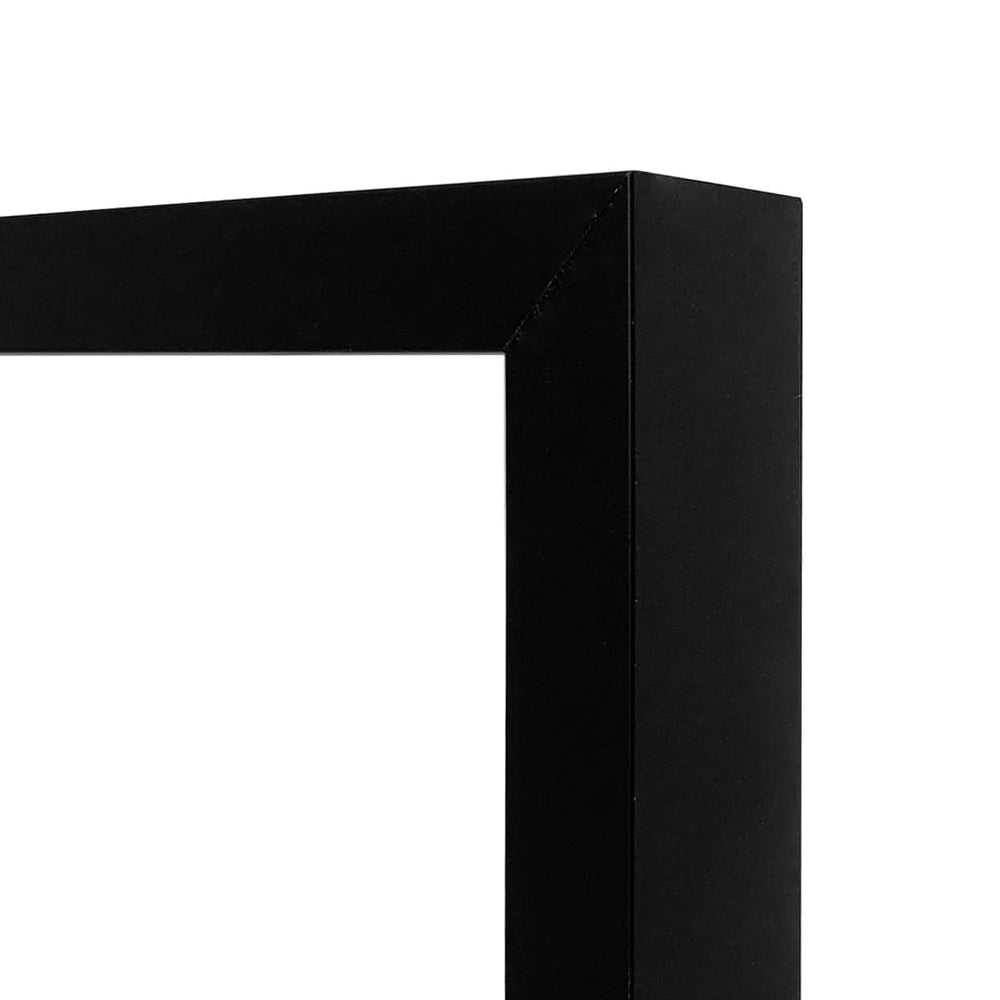
Check the quality of the poster frame you are choosing. A poster frame made from solid timber may cost a little more than cheaper plastic or low-grade alternatives, but it is usually the better choice for something you want to frame properly and keep for a long time.

Some cheaper imported poster frames are made from lower-grade MDF or composite wood rather than solid timber. These materials can be more vulnerable to chipping, corner damage and swelling if exposed to moisture over time.
How to flatten a rolled-up poster print for framing
Posters are often shipped and stored rolled up in tubes. Because of that, the paper can develop a memory and want to curl back up when removed.

One useful trick is to carefully re-roll the poster in the opposite direction. The safest way to do this is to wrap the poster around the outside of the tube in the reverse direction, then hold it in place gently with rubber bands and leave it for a while. A couple of hours is often enough.
When you remove the poster, it should sit flatter. If it is still wavy, place it face down on a clean flat surface, cover it with a large flat board, and add some weight on top, such as books. After another couple of hours, it should be flatter and easier to frame.
Read our comprehensive guide on How to Flatten a Rolled Print or Poster for Framing (Safely).
How can I remove creases or folds from a poster?
Sometimes a poster may have creases, folds or kinks from poor storage or rough handling. Fold lines are also common in pull-out posters from magazines.

There are a couple of simple methods you can try to improve this.
Steaming an art poster or print
You can use humidity to help relax a poster, using a process often called humidification. Place the poster face down on a large flat board or clean piece of cardboard, then take it into your bathroom and create some steam by running a hot shower with the door closed.
Leave the poster in the room for about half an hour, but do not let it get wet. Afterwards, return it to a normal room and place another flat board or piece of cardboard on top so it can dry flat.
You can add some weight on top, such as books, to help keep it down while it dries. This may take a few hours, but the poster should hopefully be flatter than when you started.
Ironing a poster or art print
If needed, you can also use a household iron to help reduce wrinkles or fold lines.
Lay the poster face down on a firm piece of cardboard that is at least the same size as the poster. Then cover the entire back with a clean cloth, such as a tea towel, so the iron never comes into direct contact with the poster or the board. Set the iron to the lowest possible heat and do not use steam.
Move the iron slowly over the cloth, keeping it moving the whole time. Check the result every so often. It usually does not take much heat or time. Go carefully, because paper can scorch very easily.
How to assemble and fit a poster into a frame
Once your poster is flat and ready, the actual fitting process is straightforward if you work slowly on a clean surface.
- Wash and dry your hands, or use clean cotton gloves if the poster is delicate.
- Open the back of the frame and remove the backing board.
- Clean the inside of the glass or acrylic before reassembly.
- If you are using a mat board, attach the poster first and check that the opening sits evenly around the image.
- Position the poster, or the poster behind the mat board if you are using one.
- Check the alignment carefully before closing the frame.
- Replace the backing and secure the frame tabs or clips.
- Stand the frame upright and inspect it for dust, fingerprints or a crooked poster before hanging.
Doing one final check before the frame goes on the wall can save you from taking it apart again five minutes later. That little speck of dust always seems to know when you are in a hurry.
How can I hang my framed poster?
We have created a helpful guide to take you through the steps of hanging a picture or poster frame on your wall.
- Read our blog – How to Hang a Picture Frame on Your Wall
- For more detailed advice on layouts, hook spacing and wall fixing methods, you can also read The Ultimate Guide to Picture Hanging on Your Wall
A simple tip is to test the hanging height before you commit to the wall. For most rooms, posters usually look best when hung around normal eye level, unless they are being grouped as part of a gallery wall.

Buying a good quality poster frame
Framed posters are a great way to decorate any wall, but the frame quality does make a difference.
Profile offers a unique range of Australian made poster frames in a range of sizes and styles, created especially for posters and prints. So have a think about your favourite movie, concert, destination or artwork, and get something up on your wall to start your framed poster collection.
If you would rather skip the DIY process, explore our range of Framed Posters made in-house and ready to hang. These can be customised to suit your space, style and decor. Our premium poster-sized art prints are available either unframed or custom framed and ready to hang.
Choosing Australia's best poster frames online with Profile
Explore the complete range of Picture & Poster Frames from Profile Australia. Whether you're looking for poster frames, timber frames, natural oak frames, metal frames, black frames or specialty options like shadow-box frames, we offer a wide range of poster framing solutions in different styles, shapes and sizes.

All Profile poster frames are proudly made in Australia using eco-sustainable timber and backed by our lifetime guarantee.
Poster Framing FAQs
Should a poster fit exactly inside a poster frame?
Yes, if you are framing without a mat board, the poster should closely match the frame size. If the poster is slightly smaller or an odd size, a mat board is often the easiest way to get a neat fit.
Is glass or acrylic better for poster frames?
For many standard poster frames, glass gives a clear and solid finish. Acrylic can be a better option for larger frames, children’s rooms or areas where you want something lighter and more shatter-resistant.
Can I frame a poster without damaging it?
Yes. If the poster has value, avoid permanent adhesives where possible and use a reversible method such as acid-free hinge mounting. A mat board also helps keep the glazing away from direct contact with the poster.
Can I use a standard frame for an odd sized poster?
Usually, yes. A standard frame paired with a custom cut mat board is often the most affordable and practical solution for odd-sized posters.
What is the best frame colour for a poster?
Black, white and timber are usually the safest choices because they work with most poster styles and do not compete too much with the artwork.
Should I mount a poster flat or hinge it?
For most everyday posters, a simple hinge mount is a safer option because it is less permanent. Fully mounting a poster flat can help reduce waves, but it is usually better suited to decorative prints where reversibility is not important.
Do poster frames come ready to hang?
Many do, but the hanging method can vary depending on the frame size and style. Before hanging, always check the supplied hardware and choose the right wall fixing for the surface.
Ready to Frame Your Poster?
If you are wondering how to frame a poster properly, the main things are simple. Start with the right size poster frame, choose a style that suits both the print and your room, and make sure the poster is flat and fitted neatly before you close the frame.
If your poster is an unusual size, a custom cut mat board can make life much easier. If the poster is valuable, take extra care with the mounting method and avoid anything permanent unless you are sure. Small details like clean glazing, straight alignment and the right hanging hardware also make a big difference to the final result.
With a few thoughtful choices, you can turn a rolled-up poster into something that looks finished, personal and worth keeping on the wall for years.
Want to learn more? You may also like:
- Picture Frame Gallery Wall Ideas for Beginners
- Photo Frame Ideas for your living room wall space
- How to Choose the Right Wall Art for Your Home or Office
Shop Now! Explore the range of Australian made Poster Frames online from Profile Australia. They are made using quality eco-sustainable materials and backed by our famous Lifetime Guarantee.